Subscribe to the Tile Farm Tribune
Our free monthly newsletter: Tile Farm news and events, classroom tips and inspiration, and activity spotlights you can use right away.


The ultimate goal of fluency and number sense practice is not speed, it’s the ability to think flexibly about numbers and apply them in meaningful ways.
A simple multiplication fact like 5 × 8 doesn’t live in isolation. It shows up again and again across a student’s academic life: in fractions, algebra, trigonometry, calculus, physics, economics, and beyond. When students truly understand numbers, they can recognize and use those relationships wherever they appear.
One of the clearest signs of mastery is the ability to use knowledge creatively, not just recall it on demand.
That’s where Number Portraits come in.
Number Portraits are curriculum-aligned creative task that follow the same curriculum as Daily Digits. In a Number Portrait task, each student is given a number, expression, or equation and asked to create a visual, creative representation of it using Tile Farm Studio. This process reveals far more than whether a student can compute correctly. It shows how they reason, how flexibly they think, and how deeply they understand the mathematics involved.
Number Portraits naturally invite productive struggle. Students test ideas, revise their work, and refine how they represent a mathematical idea. In doing so, they demonstrate real fluency: not just correctness, but understanding.
Just as importantly, Number Portraits turn fluency and number sense into something joyful and expressive. Even students who are typically quiet or hesitant often light up when given the chance to share their thinking visually. The activity has a low floor, high ceiling, and wide walls, allowing every student to engage while leaving room for depth, creativity, and extension.
The best way to understand Number Portraits is to see students’ work.
Below are examples of Number Portraits spanning a wide range of mathematical ideas ranging from early counting to fractions and order of operations. Each one beautifully expresses how students use fluency as a tool for thinking while allowing students to be creative and personally expressive.
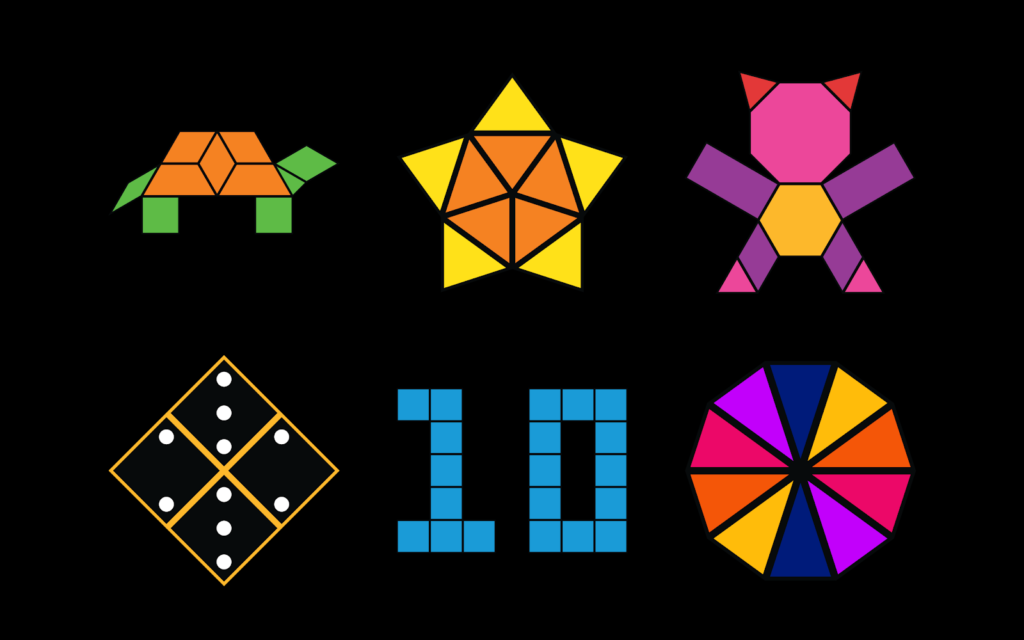
The image above shows six diverse representations of 10 made by kindergarten students in Pasadena, CA. Can you see how each Number Portrait represents the number 10?
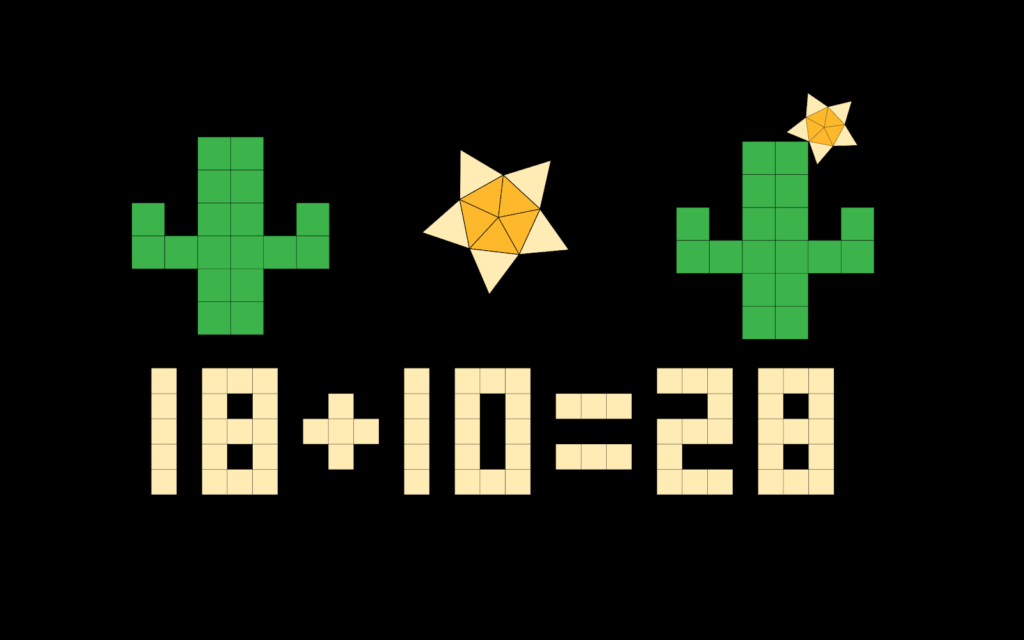
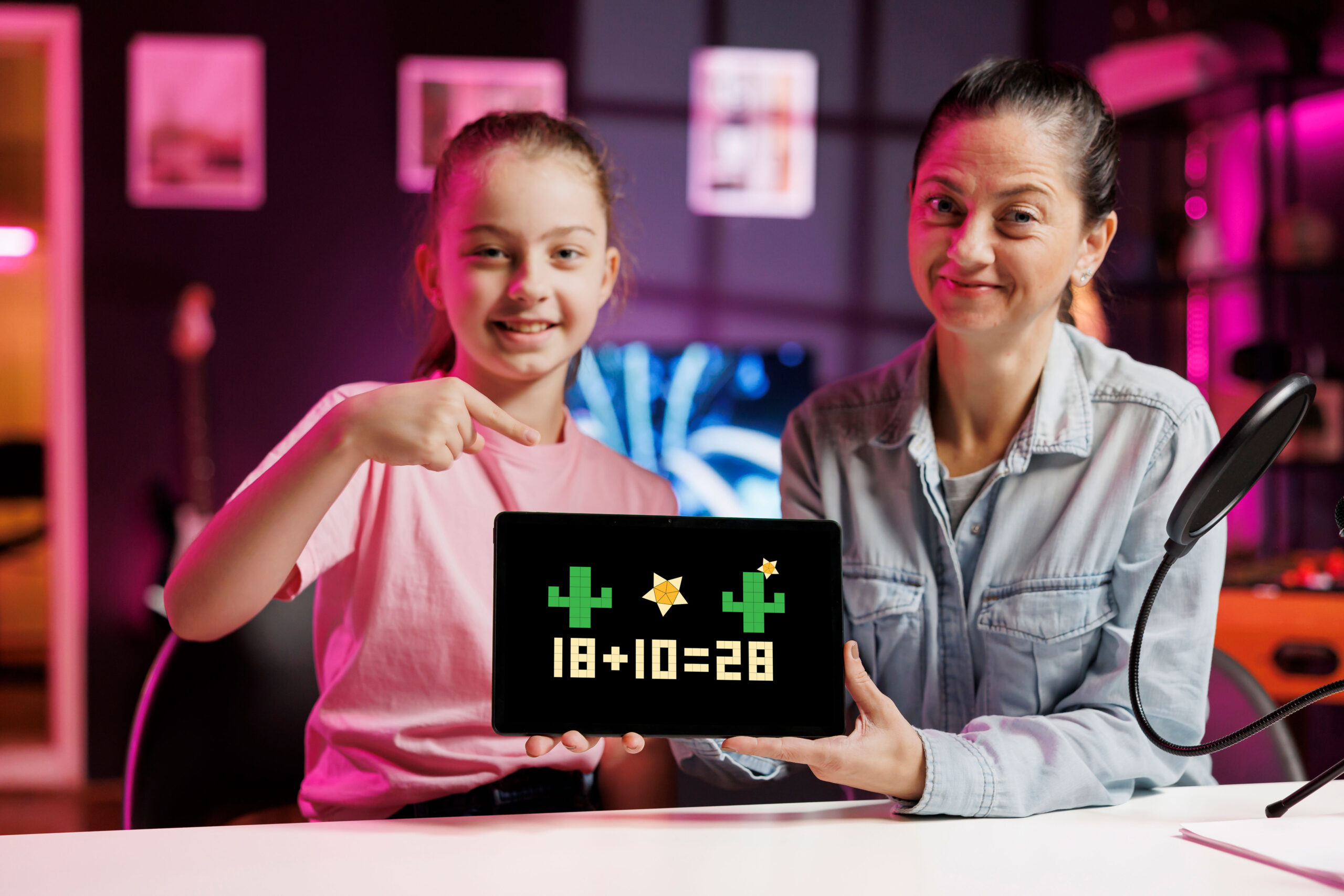
The image above, made by a student from Tucson, AZ shows how Number Portraits can connect addition fact fluency with things that are personally meaningful to students.
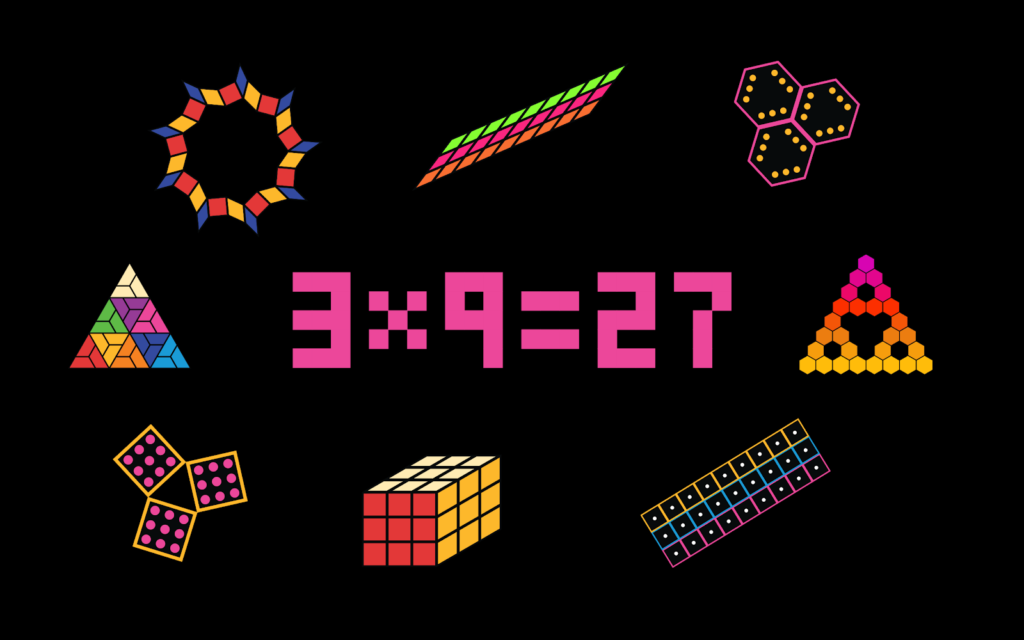
Number Portraits are a fantastic way for students to display their understanding of multiplication facts. The example above shows nine different representations a student made of the fact 3*9=27.
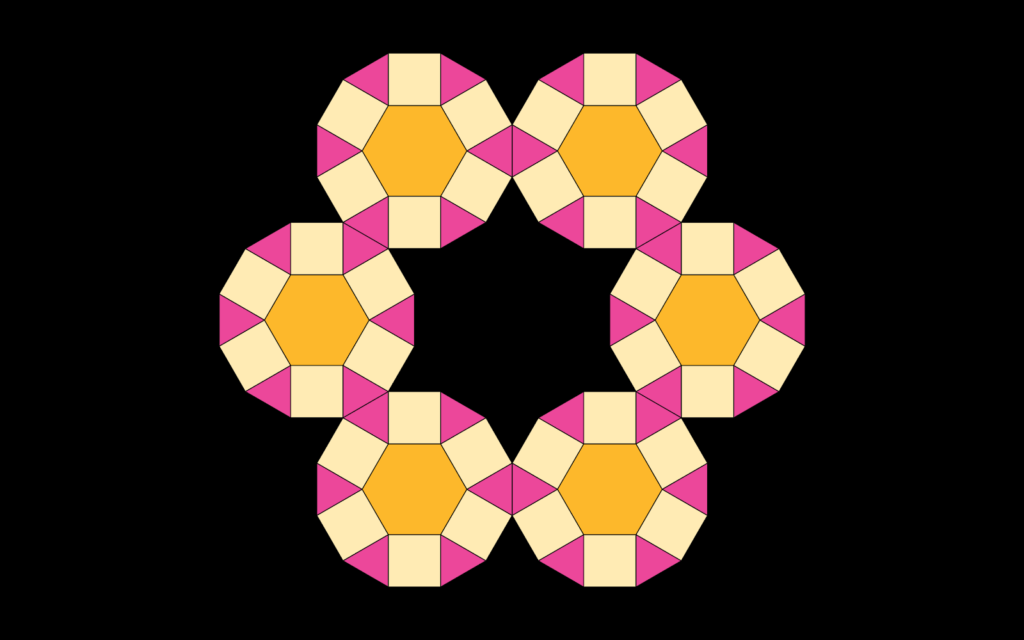
Number portraits can turn difficult to grasp concepts like order of operations into simple artistic representations that are easy to understand. This Number Portrait is an artistic visual representation of (2*6 + 1)*6 =78 78.

Even just a single Number Portraits activity can do wonders for developing students’ fraction sense and conceptual understanding of numbers. The canvas above is one students’ simple yet beautiful representation of ⅔ * ¼ = ⅙ .
These same Number Portraits can also be opened by teachers in Tile Talk, where they become powerful conversation starters. Because students’ visual representations are open-ended, they naturally lend themselves to rich number talks: students can describe what they notice, explain how they decomposed a number or expression, compare different strategies, and use geometric vocabulary to talk about arrays, groups, symmetry, area, shapes, rows, columns, and parts of a whole.
Just as importantly, students feel real pride when their work becomes the center of a classroom conversation. Instead of simply showing whether they got an answer right, they get to share how they thought, what they created, and the mathematical choices they made. That sense of ownership helps students see themselves as mathematical thinkers whose ideas are worth discussing.
Our free monthly newsletter: Tile Farm news and events, classroom tips and inspiration, and activity spotlights you can use right away.