

What’s the best way to develop great scientific and mathematical minds?
It can be helpful to draw inspiration from some of the great thinkers of our era.
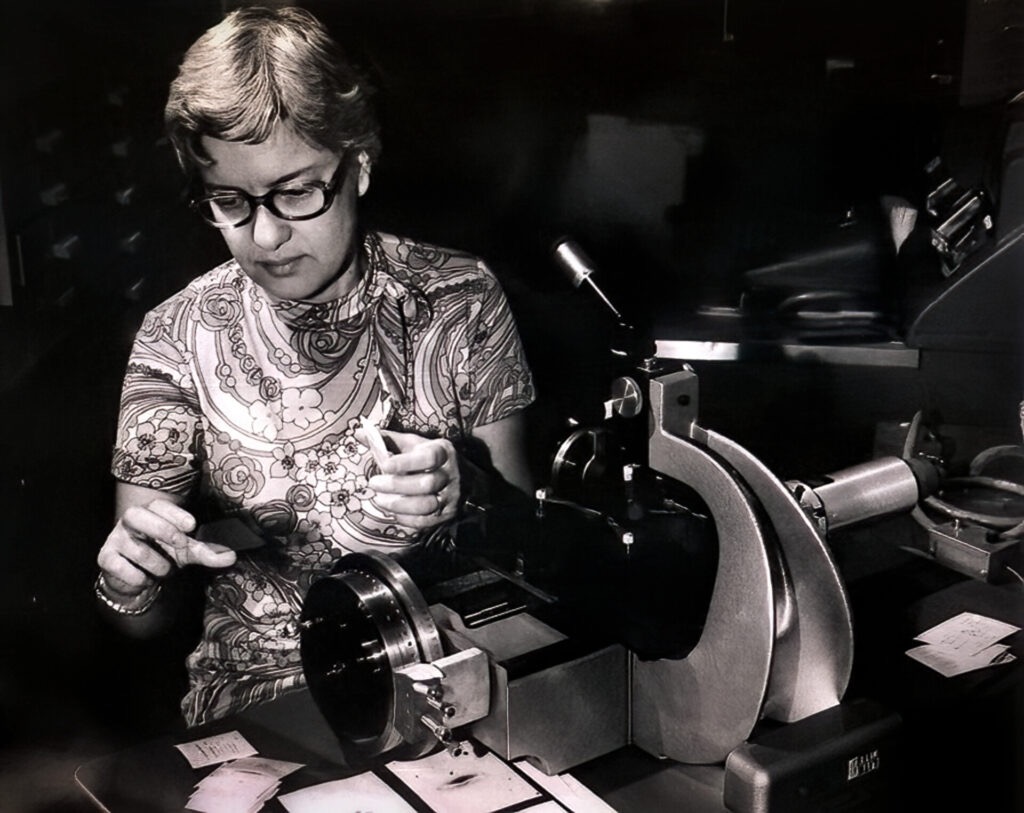
As a kid, Vera Rubin used to watch the stars drift past her bedroom window. Her father helped her build a simple telescope so she could see them more clearly. Years later, she became the astronomer who discovered evidence of dark matter — one of the most important findings in modern astrophysics.
Richard Feynman, growing up in Queens, spent hours fixing radios, building circuits, and conducting small experiments in his home workshop. Those playful tinkering sessions built the intuition that later defined his career as one of the most original physicists of the 20th century.
Chien-Shiung Wu, growing up in rural China, collected insects, performed simple experiments, and read physics books at night by lamplight. Decades later, her groundbreaking work at Columbia University reshaped our understanding of the universe.
These small, joyful, non-curricular learning moments became the sparks that powered some of the most revolutionary thinkers in science and mathematics. A common theme across all of these great minds is extra-curricular play and experimentation helped them fall in love with math and science.
Even though we all study math and science in school, the most transformative experiences often happen beyond the core curriculum. A landmark study funded by the National Science Foundation found that most of the STEM workforce traces their earliest inspiration to non-curricular experiences, whether it’s a museum visit, a hobby, or a summer project.
While there are countless playful and engaging ways for kids to engage in science education, equally rich opportunities for deep mathematical exploration are much rarer.
That’s part of what inspired us to create Tile Farm Academy. We wanted to create a space where students, through play and experimentation, can truly fall in love with math in the same way kids fall in love with science, music, or sports.
While thousands of students use Tile Farm Academy during the school day as part of core number sense, fact fluency, or intervention programs, some of our most meaningful feedback has come from enrichment programs, after-school settings, and families at home. It is often in these spaces that students have the freedom to explore, play, and experiment without constraints. This is where students really fall in love with math.
Danielle Harper, an elementary school gifted teacher said it best: “Tile Farm gives my gifted students the kind of mathematical freedom they rarely get. There’s no ceiling, often there’s no single right answer, and endless room for them to push their thinking.”
So what’s the best way to train the next generation of great thinkers?
Let students be their curious and creative selves. Let them experiment, play, and discover. Because you never know which small, joyful moment today might grow into tomorrow’s revolutionary ideas.
Interested in joyful, enriching math experiences for your students?