

By Alex Romero
In addition to wearing many hats at Tile Farm, I am a lifelong teacher and look for any opportunity I can to get back into the classroom.
This past summer, I had the opportunity to teach a two-week math class with a wonderful group of students at the Institute for Educational Advancement in Pasadena, CA. Because it was summer, I wanted to make sure we did something playful, fun, and creative. At the same time, I faced the challenge of teaching a highly diverse group of students from different grade levels, schools, and math backgrounds. Many of the students were highly gifted and wanted nothing less than an extreme challenge.
Fortunately, Tile Farm Academy is full of low-floor, high-ceiling activities that work well even with the most diverse groups of learners.
I know from both teaching and my own experience as a child that kids love writing and deciphering secret codes. With this in mind, I knew a Crypto Tiles–focused course would be a big hit, and perfect for a joyful summer STEAM class.
What is Crypto Tiles?
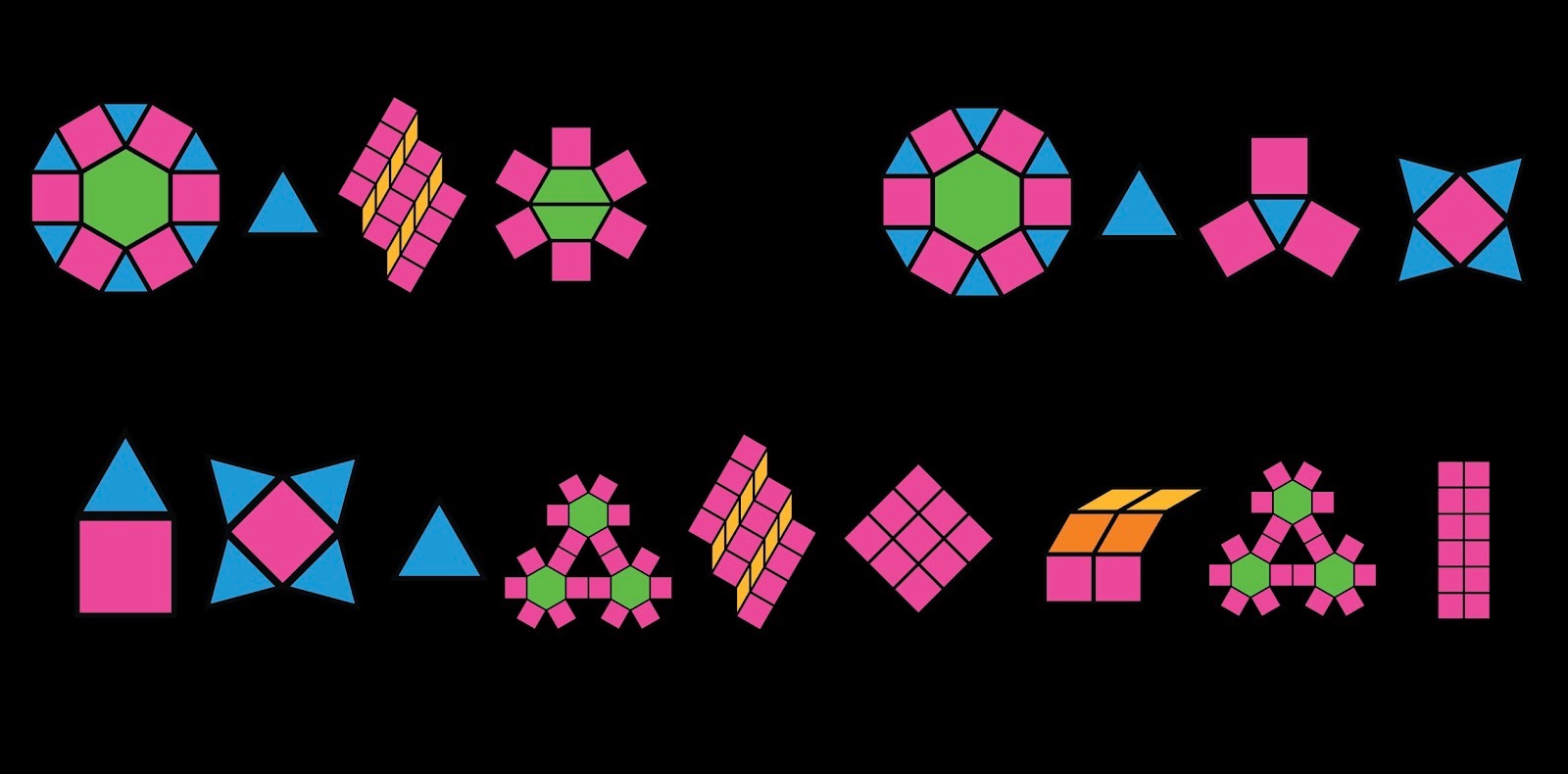
Crypto Tiles is a visual cryptography activity full of opportunities for play, problem solving, creativity, and rigorous math. In its simplest form, like the example shown above, the number of tiles in a cluster corresponds to a letter in the alphabet (A = 1, B = 2, and so on). From there, the puzzles can become substantially more complex, as seen in some of the student-created ciphers shown below.
The activity can focus on students deciphering Crypto Tiles puzzles, creating their own in Tile Farm Studio, or best of all—doing both. When students design their own puzzles and then take turns deciphering each other’s work, it becomes a highly engaging and social learning experience. It also makes my job as a teacher easier, because before I know it, the kids are running the class themselves.
High Ceiling Creative Math
One thing that never ceases to amaze me is kids’ creativity and how their personalities shine once they begin working in Tile Farm Studio. The best way to understand its power is through student work itself. Here are four examples of Crypto Tiles puzzles students came up with during my course this past summer:
Stylish Square Name
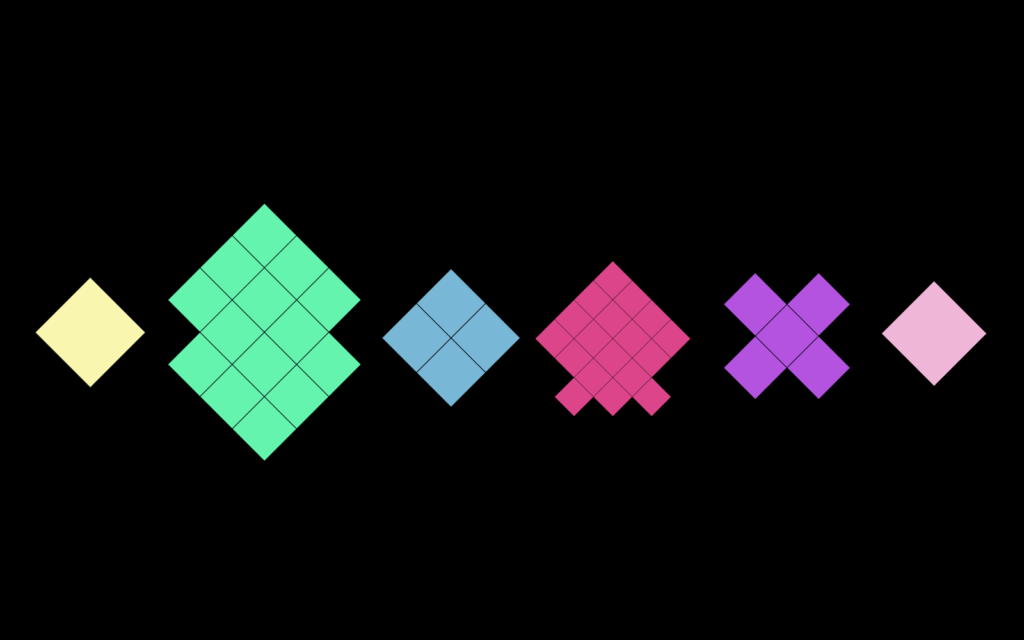
One student wrote their name in a stylish, symmetric pastel font. I love how strong the design aesthetic is in this, and the student had a healthy dose of productive struggle coming up with this design. The cipher in this is simple: the number of tiles in a cluster corresponds to the letter in the alphabet. Can you tell what this says?
Cut it in Half
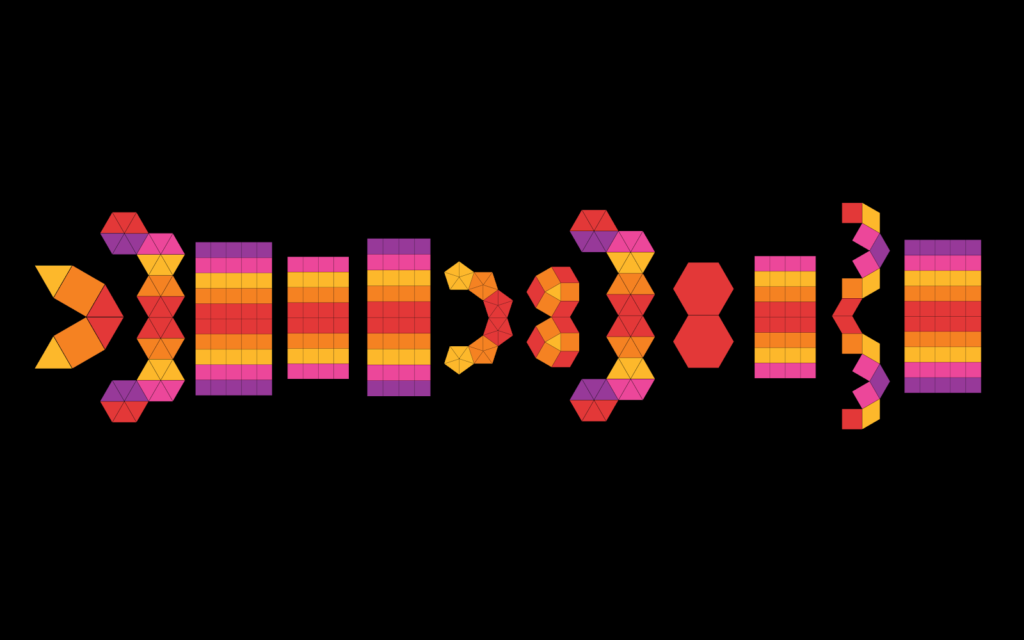
One student, excited about discovering the reflectional multiply tool in Tile Farm Studio, made a beautiful symmetric cipher, where you only count half of the tiles in each cluster to determine the letter. They wrote the name of their new favorite field of math. Can you tell what this says?
Order of Operations Font
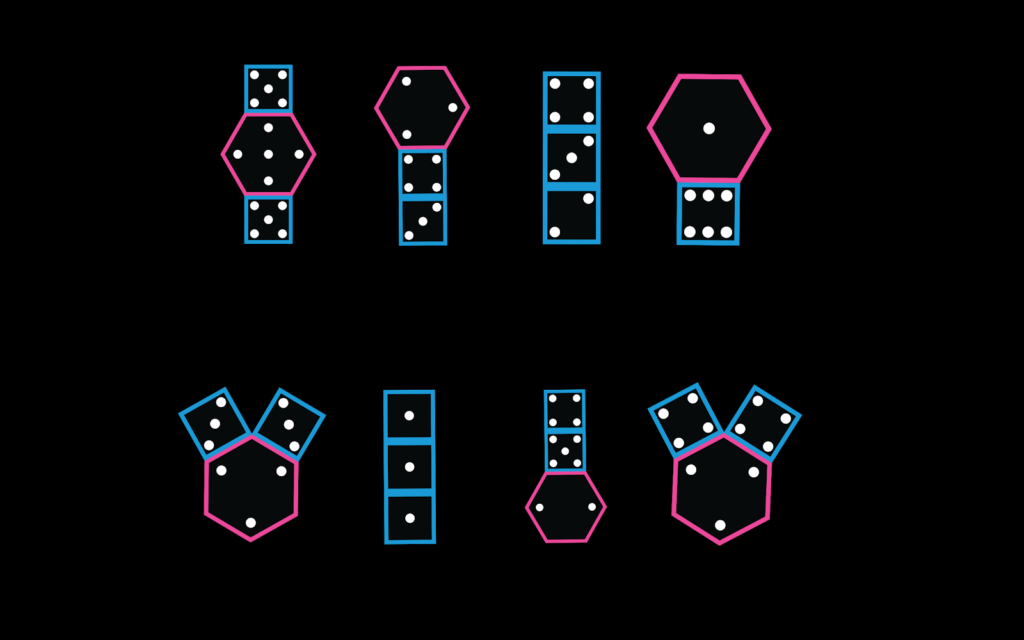
A middle school student came up with a clever font that combines multiplication facts and subtraction. In their font you take the product of any dotted squares and subtract the sum of dotted hexagons to determine a letter’s position in the alphabet. They wrote the name of their new favorite math app, can you tell what it is?
Tic Tac Toe
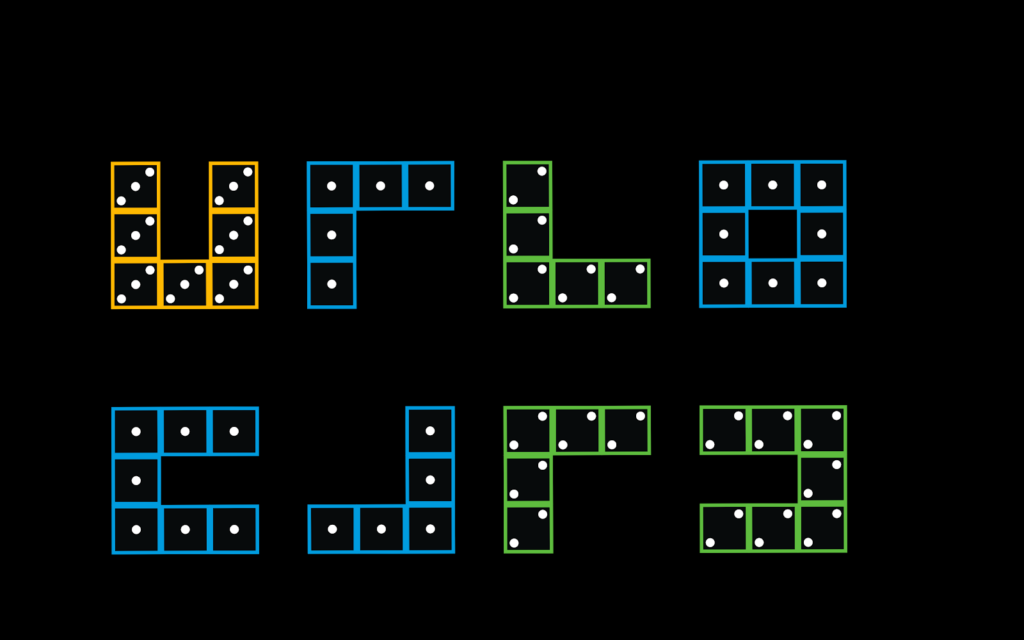
Several students got obsessed with cryptography during the class and made it their duty to research everything they could find in their free time. One student discovered a thing called a tic tac toe cipher. They came up with their own representation of it in Tile Farm Studio to write “Tile Farm”. Can you figure out how it works?
Joyful for Students and Teachers Alike
There is no doubt the kids had a blast with this activity. But I also want to express how joyful it was for me as a teacher. There is something beautiful about teaching a math class that runs on students’ excitement and creativity.
Ready to bring joyful STEAM experiences to your classroom?